
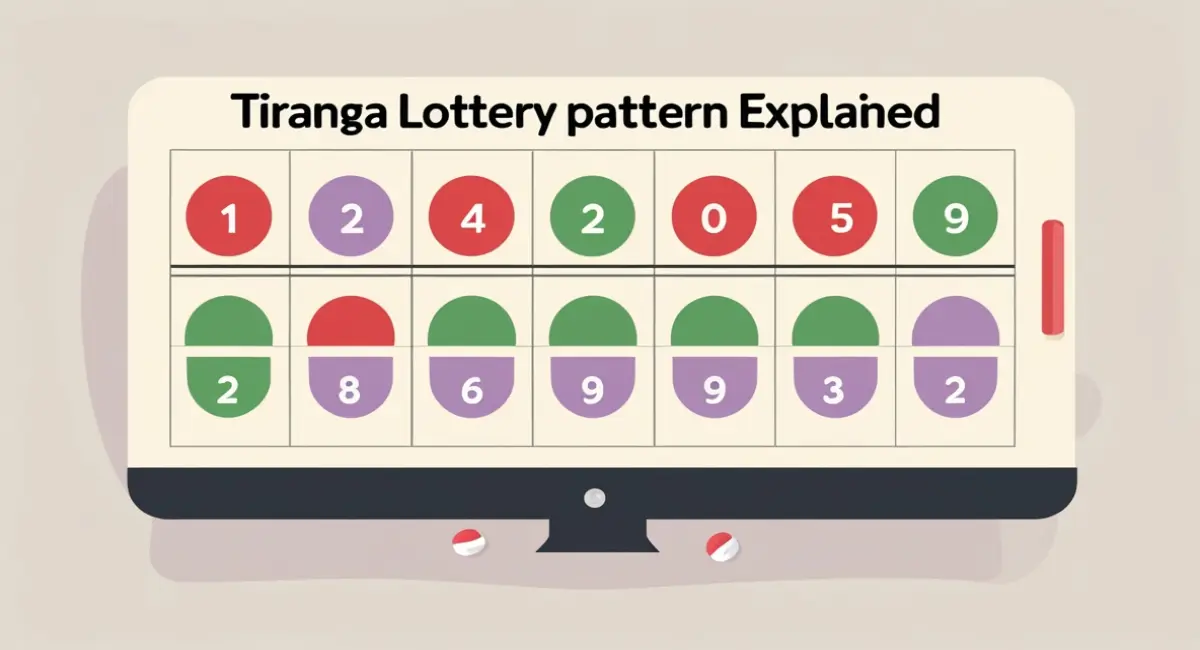
The Tiranga Lottery has gained attention among online gaming users who are curious about how number and color-based outcomes appear over time. Many players try to understand patterns to make informed decisions instead of relying purely on guesswork. Knowing how these patterns work can help users approach the game more thoughtfully.
This article explains the Tiranga game Lottery pattern using real-style examples and observations. It focuses on how results are displayed, what common trends players notice, and how understanding patterns differs from predicting guaranteed outcomes. The goal is clarity, not promises.
Understanding the Basics of Tiranga Lottery Patterns
A pattern in the Tiranga Lottery usually refers to repeated outcomes seen over a short period. These can involve colors, numbers, or size-based results depending on the game mode. Patterns do not mean certainty, but they often reflect how randomness appears in clusters.
Players using the tiranga game often track recent rounds to see whether specific colors or numbers repeat. This habit is common in many lottery-style systems and is based on observation rather than control.
How Players Access and Observe Game Results?
Before observing patterns, users need access to live results. This typically happens after completing tiranga login, which allows entry into the dashboard where recent outcomes are listed. The interface is designed to show past rounds clearly, making it easier to study short-term trends.
Some users prefer logging in directly through tiranga game login, while others use a general account. In either case, the result history is central to pattern analysis.
Real Example of a Color Pattern
One commonly discussed pattern involves color repetition. For instance, in a sequence of 10 rounds, players may notice red appearing four times within six rounds. This is often discussed in tiranga colour trading, where users analyze color frequency instead of single outcomes.
A simplified example of observed results might look like this:
| Round | Result Color |
| 1 | Green |
| 2 | Red |
| 3 | Red |
| 4 | Violet |
| 5 | Red |
| 6 | Red |
This does not guarantee the next color but shows how clusters can occur naturally.
Number-Based Pattern Observation
Some modes within tiranga lottery focus on numbers rather than colors. Players may notice that mid-range numbers appear more frequently in short windows. This is especially visible when users play through tiranga game online, where fast rounds produce more data quickly.
It’s important to remember that randomness can create the illusion of structure even when outcomes are independent.
Role of Apps in Pattern Tracking
Many users prefer mobile access because apps make tracking easier. The tiranga app displays previous results in a compact format, helping players scroll through history without interruption. Accessing this data requires tiranga app login, after which all recent rounds become visible.
For new users, installing via tiranga app download or tiranga game download is usually the first step before any analysis begins.
Are Patterns the Same Across All Tiranga Games?
Not exactly. Different tiranga games may show different frequencies because of varying rules and round timings. A pattern noticed in one mode may not appear in another. This is why experienced users separate observations by game type rather than mixing data.
When using tiranga login game access, switching between modes can help users compare how patterns differ across formats.
Common Mistakes When Interpreting Patterns
Many misunderstand patterns as predictions. This can lead to overconfidence. Some frequent mistakes include:
- Assuming repetition guarantees reversal
- Ignoring randomness in short samples
- Mixing results from different game modes
- Relying only on recent rounds
These errors can affect decision-making, regardless of whether someone uses the app or browser.
Access Points and Result History
To review official results, players often rely on tiranga lottery login, which provides authenticated access to round histories. This ensures that the data being reviewed is accurate and not based on third-party summaries.
The platform known as tiranga centralizes these features, making it easier for users to focus on understanding outcomes rather than searching for information.
A Balanced Way to Use Pattern Knowledge
Pattern awareness should be treated as a learning tool, not a winning formula. Observing trends can help users stay engaged and make calmer decisions, but outcomes remain independent. Treating patterns as insights rather than rules keeps expectations realistic.
Closing Notes
Understanding Tiranga Lottery patterns is about observation, not control. Real examples show how randomness can appear structured over short periods, but no pattern removes uncertainty. A careful, informed approach leads to better awareness and a healthier gaming mindset.
Frequently Asked Questions (FAQ) – Tiranga Lottery Patterns
What is a Tiranga Lottery pattern?
A Tiranga Lottery pattern refers to repeated colors or numbers that appear within a short sequence of game rounds. These patterns are based on observation, not fixed rules.
Are Tiranga Lottery patterns guaranteed to work?
No. Patterns do not guarantee future results. The Tiranga Lottery operates on random outcomes, and patterns only show short-term trends, not predictions.
Can beginners understand Tiranga Lottery patterns easily?
Yes. Beginners can start by observing recent results and noting simple repetitions. Over time, this helps build familiarity with how outcomes appear.
Do patterns remain the same in every Tiranga game?
No. Different Tiranga games have different formats and timings, so patterns may vary between game modes.
How many past rounds should I check to see a pattern?
Most players review the last 10–20 rounds. Checking too many rounds can reduce clarity, while too few may be misleading.
Is color pattern tracking better than number tracking?
Neither is better. Color and number patterns both rely on observation, and their usefulness depends on the game mode you are playing.